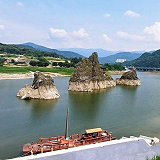
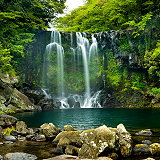
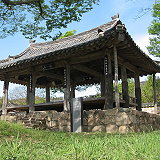
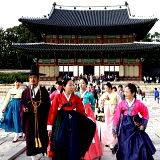
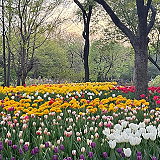
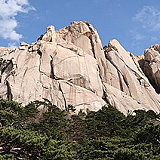
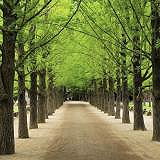
North Chungcheong is a province of South Korea. In 2014, North Chungcheong had a population of 1,578,934 and is located in the Hoseo region, in the south-central part of the Korean Peninsula. Chungcheongbuk-do is the only landlocked province in South Korea. The province is predominantly mountainous, with the Noryeong Mountains to the north and the Sobaek Mountains to the east.
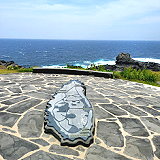
Jeju is a volcanic island located off the southern coast of South Korea, in the Jeju Province. It is the largest island in South Korea and is a popular tourist destination, known for its natural beauty, beaches, unique culture, volcanic landscape of craters and cavelike lava tubes. Jeju's 2018 population was 692,032.
Udo Island is an island in Jeju Province, South Korea. Located 2.8 km (1.7 mi) off the coast of Jeju Island, it is the second largest island in the prefecture. Udo is known for its beautiful beaches, dramatic cliffs, and sea caves. The island is accessible by ferry. The island has a population of approximately 1,862 people.
The southernmost point of South Korea is Marado Island (Mara Island), located 8 km (5.0 mi) off the southern coast of Jeju Island. The island has a population of approximately 90 people. Marado's coastal features and basalt rocks provide an ideal environment for a variety of fish, conch shells, and seaweed.
Jindo Island, also known as Jindo-gun, is one of the largest islands in South Korea, located in South Jeolla Province in the southwest of the country. It is famous for its unique natural phenomena, cultural heritage, and stunning coastal scenery.
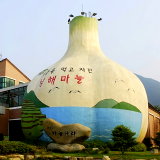
Namhaedo, also known as Namhae Island, is an island located in Namhae-gun, South Korea. The island is situated in the southern part of South Korea, off the southern coast of the Korean Peninsula. It is part of Namhae-gun, which is a county in the South Gyeongsang Province.
Suncheon is the largest city in South Jeolla Province, South Korea, with a population of 276,375 as of 2024. Located in the southeastern part of the province, the city is a beautiful agricultural and industrial hub, famous for tourist attractions such as Suncheon Bay.
South Jeolla Province is located in Honam region, South Korea, and is the southernmost province on the Korean mainland. The province's population was 1,851,124 in 2020. The capital is Muan County. Suncheon is the largest city in the province, followed by Yeosu. Other major cities include Mokpo, Gwangyang, and Naju.
137 Seobinggo-ro, Yongsan District, Seoul, South Korea
121 views 💖 1
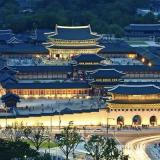
The National Museum of Korea has evolved alongside the modern history of the Republic of Korea. From its early days at Seokjojeon Hall in Deoksugung Palace in the 1960s, to the National Folk Museum building in the 1970s, then to the former Japanese Government House in the 1980s, and finally to the National Palace Museum building in the early 2000s, the museum has become a beloved landmark and a true symbol of Korean history and culture.
South Korea, officially known as the Republic of Korea, is a country located in Eastern Asia. It occupies the southern portion of the Korean Peninsula, sharing a land border with North Korea to the north. It is surrounded by the Yellow Sea to the west and the Sea of Japan (East Sea) to the east. It had a population of 51.96 million in 2022.
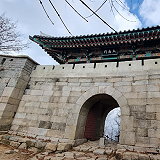
First built in 132 during the Baekje era (18 BC-AD 660) under King Gaeru's reign, Bukhansanseong Fortress was the northernmost fortress that protected Baekje from Goguryeo's forces. In the year 475, the fortress fell in the hands of Gogyuryeo after a fierce battle. As a result, King Gaeru was killed and Baekje's princess fled to Ungjinseong Fortress.
Gangwon is a city in Gyeonggi Province in the north of South Korea. It is part of the Seoul Metropolitan Area, making Goyang one of Seoul's satellite cities. It is one of the largest cities in the Seoul Metropolitan Area, with a population of 1,074,784 in 2022. Ilsan, a planned city, is located in the Ilsandong District and Ilsanseo Districts of Goyang.
37 Samcheong-ro, Jongno District, Seoul, South Korea
257 views 💖 1
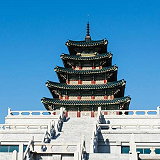
Located inside Gyeongbokgung Palace, the National Folk Museum of Korea presents historical artifacts that were used in the daily lives of Korean people in the past. Through the displays, visitors can learn about the domestic and agricultural lifestyles, as well as Korea’s cultural beliefs.
Seoul is the capital and largest metropolis of South Korea. Seoul has a population of 9,733,509 in 2020. With surrounding Incheon metropolis and Gyeonggi province, Seoul forms the heart of the Seoul Capital Area.
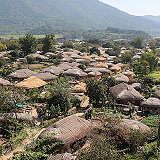
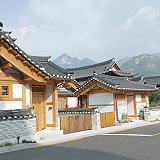
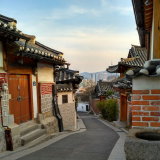
Bukchon Hanok Village is a charming neighborhood located in the heart of Seoul, South Korea. Bukchon Hanok Village offers a delightful blend of history, culture, and picturesque scenery. It is a must-visit destination for those seeking a glimpse into Seoul's traditional past and an appreciation for its cultural heritage.
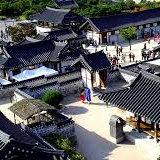
Namsangol Hanok Village is a traditional Korean village located in the heart of Seoul, the capital city of South Korea. The village is situated at the foot of Namsan Mountain in Jung-gu, Seoul. It is conveniently located near popular tourist destinations such as Myeongdong and Namdaemun Market.
Seoul Forest is a park in Seongdong District, Seoul, South Korea. It is a very large park and immensely popular with the locals for its cherry blossoms in Spring and Ginkgo Tree Forest in Autumn. It consists of four themed parks spreading over approximately 595,000 ㎡ of land.
Gangwon, officially Gangwon State, is a Special Self-Governing Province of South Korea. It is known as the largest and least densely populated subdivision of South Korea. Gangwon State is located in the mid-eastern part of the Korean Peninsula and is divided into two areas, Yeongdong and Yeongseo, by the Taebaek Mountains running along the eastern part of the peninsula. Its population was 1,537,339 in 2022.
1 Namiseom-gil, Namsan-myeon, Chuncheon-si, Gangwon-do, South Korea
131 views 💖 1
Nami Island or Namiseom is a half-moon shaped river island located in Chuncheon, Gangwon Province, South Korea. Nami Island, with the concept of “Fairy Tale Village and Song Village,” provides various cultural events, concerts, exhibitions, and more to give children dreams and hopes, couples' love and memories, and artists a space for creativity.